What India Pays for Empty Parliament and Vanity Nationalism?
India pours public funds into Parliament and state assemblies as if they are engines of accountability, but what we receive in return is political theatre, ritual nationalism, walkouts, orchestrated chaos, and a government that uses the legislature as a rubber stamp
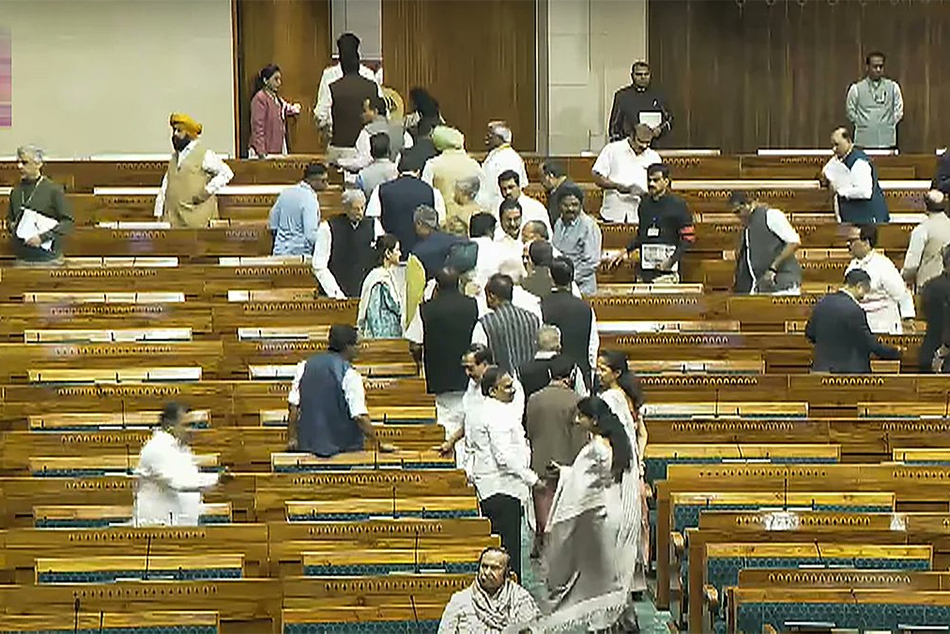
What does India pay for empty Parliaments and vanity nationalism?
Democracy costs the exchequer.
That, by itself, is not a problem. What is a problem is paying for a democracy that does not function.
India pours public funds into Parliament and state assemblies as if they are engines of accountability, but what we receive in return is political theatre, ritual nationalism, walkouts, orchestrated chaos, and a government that uses the legislature as a rubber stamp.
The tragedy is that we are financing decline. The outrage is that we are told to treat this as patriotism. The recent “Vande Mataram” spectacle symbolises this perfectly.
A full session of Parliament — meant for oversight, scrutiny, and lawmaking, was converted into a propaganda stage. Public money was spent not to debate unemployment, farmer distress, inflation, or the coercive misuse of state agencies, but to perform a carefully crafted pageant of nationalism. In fiscal terms, the cost of running Parliament for an hour is massive; in democratic terms, the cost of wasting that hour is catastrophic.
India’s Parliament costs the exchequer crores each day when in session — salaries, security, logistical infrastructure, research staff, utilities, allowances, and administrative machinery. These are not trivial sums. Taxpayers fund every minute of this system. We are not paying for song recitals or choreographed loyalty tests. We are paying for accountability. And we are not receiving it.
The fiscal debate must begin with the realisation that democracy is not free. It is a public investment. But what happens when the investment produces no returns?
When Parliament meets only to endorse the executive?
When questions are not answered?
When debates are not held?
When Opposition voices are suspended, muted, or expelled, and ruling party MPs treat the House as a campaign venue?
We have created the most expensive silence in the world – an institutional emptiness that still consumes full public expenditure.
India’s political economy is under strain. Public debt is rising. Welfare budgets are squeezed. States are begging for GST compensation. Farmers are crushed by input costs. Unemployment is at crisis levels among the youth. But Parliament – the one institution that must interrogate this collapse – has been turned into a barricaded stage for dramatic speeches, slogans, and ideological stunts. The price of this distortion is not just financial; it is structural.
When parliamentary time is wasted, policy suffers. When policy suffers, the economy suffers. When the economy suffers, citizens pay. The chain is simple. But the government pretends it does not exist.
Worse, the Opposition is not exempt from responsibility. Too often, it has surrendered space to performative outrage rather than organised legislative strategy. Walkouts may signal protest, but they also cede ground. While the BJP converts Parliament into a billboard of power, the Opposition often fails to convert Parliament into a battlefield of ideas. Citizens pay for both failures: the authoritarian impulse of the ruling party and the inconsistency of those meant to challenge it.
The fiscal cost of non-functioning democracy is more dangerous than the fiscal cost of democracy itself. Every minute wasted in Parliament has a multiplier effect. Policies pass without scrutiny. Bills become laws without examination. Budgets are passed without forensic questioning. Parliamentary committees—the backbone of legislative analysis—are either weakened, overpowered, or ignored.
If a private corporation behaved like this, auditors would shut it down. If a village panchayat behaved like this, people would revolt. But when the national legislature collapses into spectacle, we are asked to applaud.
The question is not whether “Vande Mataram” deserves respect. The question is whether Parliament deserves humiliation. There is no shame in patriotic expression. There is shame in using patriotism to smother accountability and evade economic questions.
India is heading towards a dangerous contradiction: A rising expenditure on democratic infrastructure, and a falling commitment to democratic functioning. We are paying premium prices for a democracy that no longer delivers premium governance. This is not sustainable. It distorts public finance, undermines policy coherence, and erodes citizen trust.
The economic cost of legislative non-performance is felt everywhere. It appears in delayed welfare payments, incomplete infrastructure, rising inequality, weak oversight of corporate power, and the misuse of investigative agencies for political targeting instead of economic oversight.
It appears in falling investment confidence, because no serious economy can operate under weak parliamentary scrutiny. It appears in the poor quality of policymaking, where laws are written in haste and corrected through court battles rather than democratic debate.
If the Parliament is to justify its expenditure, it must return to its purpose: informed, evidence-based debate. The ruling party must stop treating it as a ceremonial appendage of the executive. The Opposition must stop treating it as a stage for symbolic protest alone. Citizens must demand productivity not in the mechanical sense of bills passed, but in the democratic sense of bills examined, challenged, amended, and improved.
This is not about saving money. It is about saving meaning.
A democracy that costs crores but produces nothing is not a democracy. It is an illusion maintained at public expense. It is taxpayer-funded authoritarian efficiency disguised as patriotic theatre.
India’s Parliament does not need to be cheap. It needs to be effective. It does not need to be grand. It needs to be honest. It does not need new buildings, slogans, or spectacles. It needs integrity, transparency, seriousness, and courage.
Until then, the true price of Indian democracy will not be measured in rupees. It will be measured in what we have lost – and what we continue to lose, while paying for institutions that no longer perform the duties they were built for.
[The writer, Ranjan Solomon, is a Political Commentator.]
Follow ummid.com WhatsApp Channel for all the latest updates.
Select Language to Translate in Urdu, Hindi, Marathi or Arabic


Dr Ambedkar’s Critique of Islam and Muslims: A Scholarly Analysis