Modi, Mamata Battle in Bengal is Not Political Alone
What is happening in West Bengal during the last few days is more than RSS and BJP, the Saffron Ecosystem, simply trying to set a political narrative
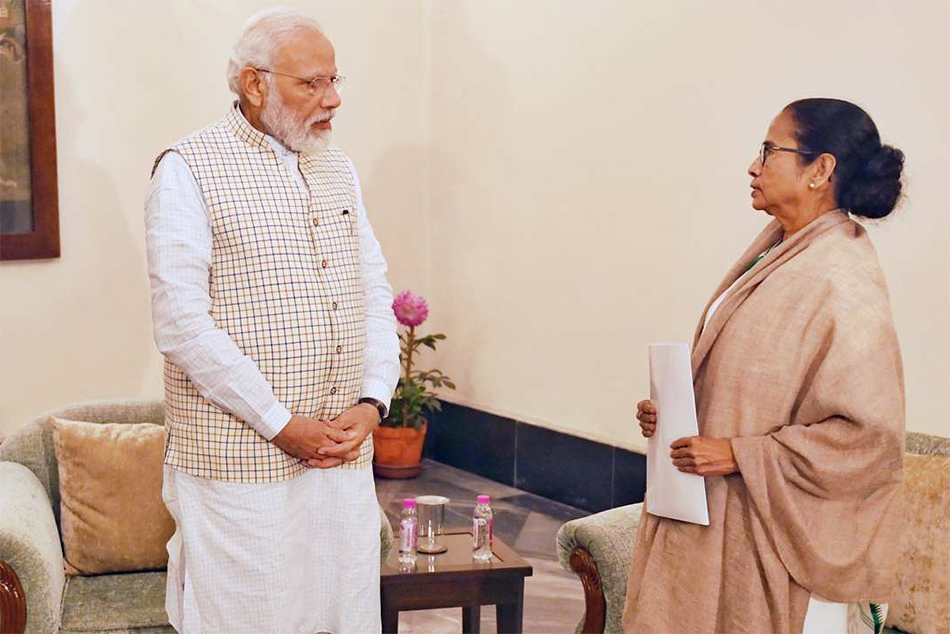
What is happening in West Bengal during the last few days is more than RSS and BJP, the Saffron Ecosystem, simply trying to set a political narrative. Both have their divergent reasons for targeting Bengal, but it is the Bengali sub-nationalism that has been under attack. In their desperation to capture West Bengal and expand with the pan-India dynamics, they have endangered the identity and the very existence of the Bangali and their culture.
It is indeed frightening to see that the idea of Bengal has turned a “battleground” for Gujarati and Bengali culture with the spectre of intensification of the social conflict. Once the social conflict escalates, the much talked about and admired Bengali culture would suffer serious erosion. The most potent threat that Bengal faces is from the Gujarati duo, Narendra Modi and Amit Shah. Their consistent rhetoric that Bengal should emulate Gujarat’s growth model and turn into a developed industrial destination causes much consternation. Though they have not been forthcoming, their desire is to turn Bengal into a “Gujarat colony”.
Some may deny it as a literal policy or plan, but their desperation to win the election and capture Bengal is testimony to this. Only recently a top BJP leader has described winning Bengal assembly election essential for the expansion of BJP across India. Bengal’s culture and civilisation have been major impediments in its plan to expand across India. It would not be an exaggeration to say that “Gujarat model,” is the synonym of Adani’s protuberance. Whether the “Gujarat model” has “failed” or led to significant “growth” is a subject of intense debate among economists and political analysts, but the fact remains that significant rural poverty persists, with high multidimensional poverty rates in certain districts (like Dahod), alongside issues like educated youth unemployment and distress suicides linked to economic hardship, indicating a gap between industrial growth and inclusive poverty reduction.
Gujarat might have attained high industrial economic growth but has been lagging in human development and social equity indicators. Recent datas of Niti Ayog indicates around 11.66% of its population is multidimensionally poor, facing deprivations in health, education, and living standards, with significant district-level variations, like high poverty in Dahod (over 38%). High rates of maternal mortality rate (MMR), infant mortality rate (IMR), and child malnutrition were significant concerns. Modi who has not succeeded to alleviate poverty in his own state, which he ruled for twelve years claims to bring prosperity to Bengal. It is indeed sad to listen to Bengal BJP leaders claiming to emulate Gujarat’s “growth model” to develop West Bengal if voted to power. This is purely an act of misleading the people.
It is wrong to construe that Modi’s focus on West Bengal is primarily driven by political and developmental factors. The real motive has been to benefit Adani. While the Adani Group has proposed significant investments in Bengal, it already has massive investment in the neighbouring Bangladesh. Besides, the Adani Group is significantly expanding its presence in the North Eastern states of India through a massive investment plan, focusing on developing a strong network in key infrastructure sectors, particularly green energy and digital infrastructure.
Also Read: Why are Bengali Lives so Cheap?
In May 2025, Gautam Adani announced a doubling of the group’s investment commitment in the Northeast to a total of ₹1 lakh crore over the next decade. This is in addition to the ₹6.2 lakh crore reportedly invested in the region since 2014. The group’s network development is concentrated in critical infrastructure areas across most North Eastern states. It already has some of the airports in eastern India in its kitty. The investments span other vital areas such as city gas distribution, cement production, and capacity-building through skill development centers. Bengal has historically faced challenges with industrialization and attracting private investment. Taking advantage of the situation he intends to promote Adani in Bengal and it cannot be done under Mamata’s government though she too has been soft to Adani. But she was not for handing over Bengal in platter to Adani.
The Adani Group has expressed a strong interest in investing over ₹10,000 crore in West Bengal across various sectors, including ports, data centers, logistics, and edible oil production. While Adani’s business interests align with the central government’s push for infrastructure development, Modi’s focus on West Bengal is promote Adani’s agenda. Significantly some days back Modi has said that West Bengal holds immense potential for industrial development.
Bengal needs a massive industrialisation and growth, a requisite requirement for checking migration. But certainly it cannot be done at the altar of sacrificing the culture and societal ethics and relations. It is worth taking note that Mamata has been holding investors meet to bring investment. But she has been opposed to “outsider” penetration in the state. Some time back she has used the “Gujarat colony” phrase to counter the BJP’s narrative, framing the BJP as an “outsider” party that does not understand or respect Bengal’s unique cultural identity and heritage. Bengal thrives on a culture of excellence and harmony, which she contrasts with the “Gujarat model”.
Also Read: The Othering of Bengalis
In contrast to Modi, the RSS is interested in promoting its Hindutva ideology and working toward a “Hindu Rashtra”. However the RSS is scared of Bengal’s strong cultural and nationalistic sentiment which embodies Hinduism, but is antagonistic to RSS’s Hindutva. Though RSS has been active in the state for quite long, it has not succeeded so far in creating a strong base. It aims to counter what it perceives as a decline in the Hindu population and the rise of “radicalism” in the state, which it argues poses a threat to national security.The RSS accuses the TMC government of appeasing minority communities, which it argues is detrimental to Hindu interests. Like BJP and Modi, RSS also has a mystifying perception about Muslims.
Bengali Muslims practice different nature of social-culture ethos than the Bihari Muslims, those migrated from Bihar. In 1941-42 Syama Prasad Mukherjee had served as the Finance Minister in coalition the Ministry, led by A.K. Fazlul Haq, which included the Muslim League, when Congress ministries had resigned and the Quit India Movement was active. Unfortunately it is the communal politics of RSS and BJP which alienated the Bengali Muslims.
After a long gap in 2016, the RSS had set a “Mission Bengal”. Districts after districts were taken over by men wearing saffron bandanas, who chanted “Jai Shree Ram,” and welded swords and trishuls. The saffron flags were mounted on vehicles, on houses and on shops. The slogan Jai Ram Shree Ram has not been the part of Bengali culture. In Bengali culture Maa Durga is superior to Ram. RSS tried to change the cultural tenet by imposing Ram. The RSS took out massive Ramnavami procession”to display aggression of the Hindu youth. It was shakti pradarshan”. Since 2016 RSS had tried to mobilise thousands of Hindu youth for the processions in every possible district.
The political narrative “jihadis are entering into Bengal” was basically flawed and was part of its conspiracy. The RSS says jihadis have entered Bengal. Fine. But they must substantiate their allegation. The primary reason is no such development has taken place. They have been targeting the migrant Muslims coming to Bengal for employment. Like Hindu migration, Muslims from Bihar and eastern UP have been migrating to Bengal. Ironically, the RSS in 2017 at its ABPS summit instead of looking at this from economic perspective, described it as the rise of “jihadi elements in West Bengal, and “encouragement to the anti-national elements by the state government due to its Muslim vote bank politics and declining Hindu population in the state.” It also urged the Central government to take “firm action against these anti national Jehadi elements of the state”.
Yet another fact which the RSS deliberately ignores is; the Muslims or Hindus from both Bengal and Bangladesh have close familial relation. They interact. But this interaction is projected by RSS as infiltration of Bangladeshis in India. It is a widely known fact that Kolkata is the medical destination for Bangladeshis. A large number of hotels, lodges and even specialist hospitals depend on patients from Basngladesh. The RSS has smashed this business. For RSS, a BJP government will help it to accomplish its mission. During these years it has expanded awfully. At least 1,700 shakhas, 800 milan units and 300 mandalis—a unit that holds monthly meetings—are operational in the state. Nearly 4,000 swayamsevaks work in each of 294 constituencies of the state. RSS has used the proximity of Mamata with the BJP of Atal Behari Vajpayee government to expand in Bengal. During her rule the shakhas mushroomed in the state. During CPI(M) rule there were 800 sakhas now they have shot to 1,700.
Also Read: Living Reality of Muslims in West Bengal - Appeasement or Exclusion?
The two cultures have historically different primary value systems regarding occupation. Bengali culture has traditionally emphasized academics, arts, and government service as sources of social standing, while Gujarati culture has a long, strong tradition of trade, enterprise, and business. It is a known fact that cultural differences generate conflicts and, therefore, retard economic development. The cultures of Bengal and Gujarat are not compatible. Moreover Modi has his plan to hand over the state to Adani. This will be more tragic for the state. The state will witness huge influx of non-Bengali further endangering the Bengali culture.
The tussle between the BJP and the TMC is as a clash between the TMC’s assertion of Bengali sub-nationalism and the BJP’s narrative of a uniform, Hindi-centric national identity, which is often associated with its leaders who hail from states like Gujarat. The TMC often frames the BJP as a party of “bohiragoto” (outsiders) who are ignorant of or disrespectful towards Bengal’s unique culture and heritage. BJP leaders’ occasional mispronunciations of Bengali names or words have been used by the TMC to reinforce this narrative. It has even been evident in their slights against Bengali cultural icons like Rabindranath Tagore and Ishwar Chandra Vidyasagar and others.Besides TMC’s “Jai Bangla” slogan is often presented as a secular and regionally authentic counter to the BJP’s “Jai Shri Ram” chant.
The TMC has accused the Modi government of systematic marginalization of Bengalis, including issues related to central funds and the treatment of Bengali migrant workers in other states, including Gujarat. While regional identity is a potent factor in the political discourse, the underlying issues also involve intense political competition for power, control over resources, economic factors like unemployment, and a long-standing history of political violence in the state. With the 2026 Assembly elections barely two months away Mamata is working to consolidate her image as the sole defender of Bengal’s pride and rights. While BJP BJP is banking on welfare delivery, Hindu vote consolidation, and anti-incumbency to challenge TMC in key districts.
The Gujarati duo quite surprisingly have been engaged in the battle to appropriate Bengali icons and symbols. Saffron ecosystem uses its might to identify with illustrious Bengali figures, like Swami Vivekananda. But this appears to have backfired. Notwithstanding putting its best effort to entice Bengalis, the party could not succeed in achieving its object. It is still being identified as party of Hindi speaking migrants. The BJP has electorally performed well in the areas inhabited by the Hindi speaking OBC, EBC and to some extent Gujaratis. In the latest SIR exercise unfortunately the names of large number of these saffron supporters have been deleted logical discrepancies. They have not been to produce the necessary certificates and documents.
[The writer, Arun Srivastava, is a Senior Journalist]
Follow ummid.com WhatsApp Channel for all the latest updates.
Select Language to Translate in Urdu, Hindi, Marathi or Arabic