Pushing Muslim Political Consciousness Back to Pre-Partition Mindset
The Indian Muslims are currently not just back to square one — they are, in truth, below zero, because whatever political capital the community had before the Partition has eroded further
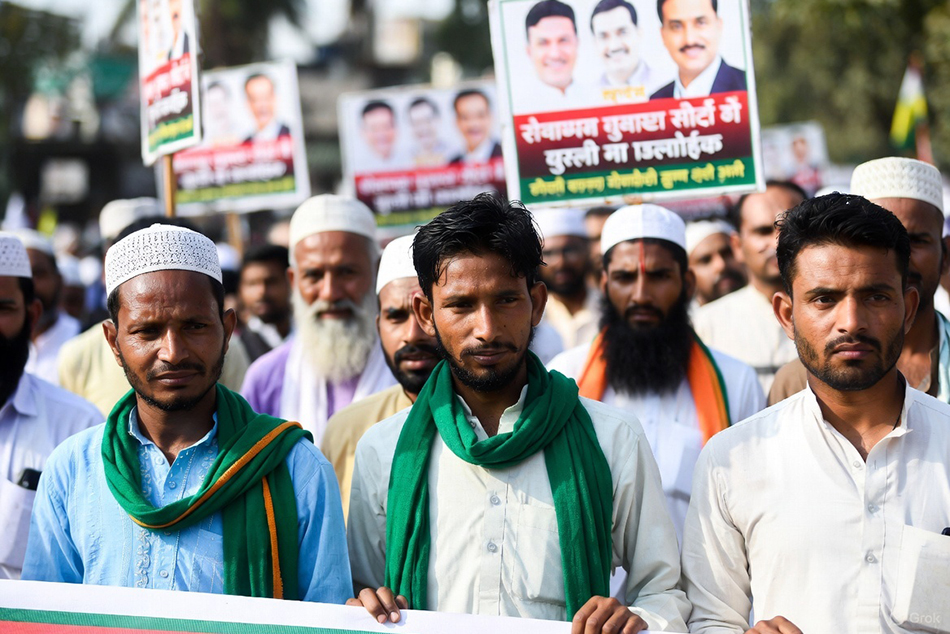
In the politics of Mumbra - India’s largest Muslim-majority ghetto, a term coined during last year’s Maharashtra legislative assembly elections has resurfaced with fresh intensity: The “Bhoonga Company” and its “Maulanas”. As the local body elections approach and political groundwork accelerates, the phrase has re-entered the political vocabulary, triggering renewed debate about its meaning, role, and relevance.
During the previous Assembly elections, Jitendra Awhad, a three-term sitting MLA, was re-elected with a thumping majority. His opponents attributed his victory to this so-called “Bhoonga Company”, portraying it as a force that diverted attention from everyday civic issues and mobilised the Muslim electorate en bloc against the BJP in the name of “saving Islam” and “protecting Muslims”.
According to these critics, the group — largely comprising local Maulanas, took to the streets and did the ground work for the INDIA bloc, advocating for the defence of the Constitution and the secular fabric of the country. Their messaging resonated strongly in a community already deeply anxious about political developments and inclined toward any campaign that promised the electoral defeat of the BJP. Since the massive victory that the BJP secured in last year’s legislative assembly elections, this so-called “company” has been blamed for giving the Hindu side the very fodder it needed to counter-polarise and mirror the same communal campaign in reverse.
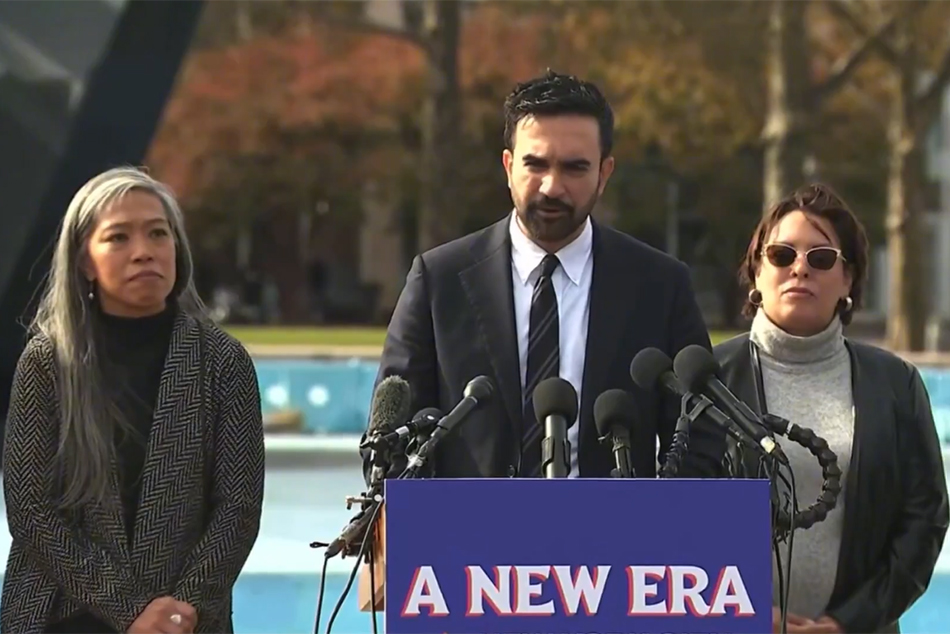
The group went into full action after one of the country’s most senior Muslim scholars, Khalil-ur-Rahman Sajjad Nomani, held a press conference at the Mumbai Marathi Patrakar Sangh and released a list of 288 candidates. Critics argue that this move effectively turned the Muslim electorate into a mirror image of the BJP voters — equally identity-driven, equally communal, and equally conscious of religious boundaries.
And this raises an uncomfortable question: Socially, what difference does this make?
I myself support the electoral and political defeat of the BJP, but if that defeat is pursued through the same identity-polarising methods, what would be the long term cost of this defeat?
Equally communalizing and essentially the same and opportunistic in nature, can Muslims mirror the attitude of the Hindu electorate and outsmart the Hindu right wing? When religious issues and consciousness take centre stage, they are bound to end, in every existential question into being reduced essentially to a non-issue.
Pursuing short-term electoral gains through clerical mobilisation risks causing long-term damage to an already fragile social fabric. Elevating a few religious figures into unquestionable authorities over a diverse and non-homogeneous Muslim population and asking them for electoral/political guidance consolidates the community under the banner of “Islam under attack”.
Yet the moment this mobilisation happens, the very democratic act of voting is turned into a battlefield of religious identities, with the language of liberal democracy invoked only superficially and to keep the illusion of constitutional democracy intact
This rhetoric found sharp resonance just before the last MLA elections, when the then Chief Minister visited the ashram of Ramgiri Maharaj who had, according to a large section of Muslim blasphemed the Prophet and declared that no one could touch him. This fed communal tensions at a critical moment. Muslims across Maharashtra protested and demanded an FIR against Maharaj, and from that point onward the election discourse in places like Mumbra was reduced to the Maharaj and his remarks. The secular opposition amplified this line more effectively than the clerics themselves, attacking the Mahayuti candidate Najeeb Mulla as a “friend of a blasphemer”, while essential local issues disappeared from the conversation.
This is the immediate and troubling drawback of such politics: It fuels communal polarisation precisely when attention should be on governance, development, and civic needs and other genuine grievances of the Muslim Citizenry. The pre-election opportunity to negotiate or demand accountability is lost.
The Maharaj was believed to be shielded by Eknath Shinde, and the so-called “Bhoonga Company” attempted to turn this into an emotional flashpoint to push votes toward the Maha Vikas Aghadi (MVA). But the idea that Muslims voted en bloc because of clerical influence does not hold. These groups may have tried, but Muslim voters — as citizens, were not simply swayed by them. Rather, they acted from a broader political understanding shaped by their opposition to the BJP. The so-called clerical influence is overstated; Muslim political behaviour is driven far more by lived realities than such company.
But this so-called “company” is also guilty of something serious: It has tried its best to whitewash the conduct of local hooligans, MLAs, and discredited power brokers. Its support for them does not come from any democratic consciousness — it comes from a raw religious understanding similar to a normal Hindus support for BJP due to the construction of Ram Mandir.
A mix of clerics, habitual mischief-makers, and corrupt politicians roamed the streets urging Muslims to vote against the “anti-Muslim” party, yet the same Muslim voters were discouraged from demanding any accountability from the self-proclaimed defenders of secularism and democracy, and denied opportunity to look within and the secular parties continued pandering Muslim Communalism under the garb of minority rights.
In doing so, the company pushed Muslim political consciousness back to a pre-Partition mindset, when similar appeals were made asking Muslims to vote for the Muslim League on the promise that overwhelming electoral support would “secure Pakistan”.
The logic then was: vote for us so we can show the British the strength of our mandate. That politics did not deliver salvation then—and what makes anyone believe that a worn-out version of the same formula will deliver anything now? Fear drove the community then; fear drives it now. But fear delivered no relief then, and it delivers none today.
Muslims are therefore not just back to square one — they are, in truth, below zero, because whatever political capital the community had before the Partition has eroded further. The so-called secular parties spent years pandering to clerical egos while ignoring the genuine civic aspirations of citizens who happen to be Muslim. The result is a population deprived of basic developmental rights and repeatedly diverted into being cannon fodder for clerics and secular parties during elections.
On the opposite side, the offer is no better in Mumbra where the NCP (Ajit Pawar) now experiments with a new kind of “Muslim politics”, one that takes shape under the shadow of Hindutva itself. What is this leadership supposed to stand for? What does it aspire to? What future does it imagine for the community?
Sadly, the propagators of this politics have no answers — what political alternative does the non-secular ( BJP allied) parties offer to citizens who happen to be Muslim, will be something that could be witnessed in the coming and ongoing local body elections.
Surprisingly, this so-called company has not reappeared since the tragic defeat of the MVA (Maha Vikas Aghadi) last year. This absence suggests that, despite whatever good faith some of its members claimed, the group’s real objective was narrowly limited to the five-year ritual of voting in an electoral democracy—and nothing more.
Such a constrained vision has only harmed the democratic development of Muslim citizens. Muslims, who are diverse and politically aware, cannot be persuaded so easily to support one side or oppose another. But when politics is reduced to these periodic theatrics, Muslims are dragged into a political role where their only function is to vote every five years, and their issues are restricted to protecting their religious symbols and every genuine grievance is pushed under the carpet.
This is dangerous, because question of human dignity that Muslims aspire for, cannot be protected in isolation. It can only be secured through structures and rights that extend universally to everyone, not through dispatching human dignity aimed exclusively at Muslims.
Yet the company’s rhetoric pushed Muslims into a narrow, reactive politics, and in its very first major intervention, it failed miserably. Worse, its narrative of “saving Islam and saving Muslims” left the community with a troubling question: If the BJP wins, is Islam finished? If the answer is YES, then it implies Muslims have no faith left in their own religion and the Mullahs are out of Islam. If the answer is NO, then what was the point of all this fear-mongering in the name of religion?
The fact remains: Such a senseless act was carried out in the name of Muslim leadership. Sajjad Nomani chose to walk alongside individuals whose political intentions were shallow, and whose vision for Muslim politics was no better than ordinary power-brokers. Eventually a tactic in electoral politics is said to have worked when it achieves what it wanted to achieve, it has failed on that front as well. By doing so, he inadvertently legitimised a company that offered no long-term roadmap for the political future of Muslims.
This top-down, anti-democratic method of instructing voters through clerical authority fundamentally violates the spirit of democracy. The idea that a person who merely studies religion is automatically qualified to guide millions on political choices makes no sense in the 21st century. The pre-modern model where the king and the religious authority were fused into one moral order was buried after the Enlightenment, and attempts to revive it today only limits how one can exercise citizenship . By empowering clergy to influence elections, the so-called secular forces also lose the moral right to criticise the Hindu Right for its use of religious symbolism—because they end up replicating the same communal logic under a different name.
When the results came last year, all the accumulated anguish of Maharashtra’s Muslims erupted in Asaduddin Owaisi’s sharp criticism of the “company” that had mobilised the community. His anger highlighted an unresolved question: in what capacity are these actors intervening in the political process—are they individual influencers, an organised network, religious authorities, or simply opportunists?
Until this is clarified, their role will remain opaque and unaccountable. If clerics attempt endorsements again this year, they will invite renewed accusations of “vote jihad,” further polarising an atmosphere already charged with suspicion. Exercising democracy in such an undemocratic way forces citizens to abandon genuine civic concerns and respond instead to manufactured identity anxieties.
The larger danger is that this style of mobilisation helps cultivate a TLP (Tehreek-e-Labbek) like consciousness within the community—a universe where accusations of blasphemy, emotional and clerical coercion, and mob-certified religiosity shape political behaviour. Once normalised, such attitudes can easily be turned inward, giving religious hardliners the authority to target Muslim reformers under the pretext of protecting faith.
The politicisation of blasphemy is not a one-way street; it inevitably pushes society toward a Pakistan-like situation where dissent becomes punishable and clerical authority overrides democratic choice. Yet some clerics seem frustrated that Muslims are not as bigoted, enraged, or violently mobilised as their Hindu counterparts, as though moral restraint were a weakness.
The Company, in this sense, would be a logical extension of the “vote jihad” narrative. It mirrors the communal strategies it claims to resist. Those who claim to support the secular alliance are often no less communal than the BJP; they simply operate from the other side of the identity divide. Fighting one form of communalism with another exposes the confusion at the heart of the secular bloc and its cynical willingness to employ any force—religious or otherwise—to counter the BJP. If secularists are comfortable seeking blessings from Muslim communal actors, then what moral principle prevents the BJP from intensifying identical tactics among Hindu voters?
Whenever elections approach, fundamental civic concerns—basic amenities, public services, and the everyday ways one exercises citizenship—are pushed to the margins. In their place, personal beliefs and identity-based anxieties take centre stage. This shift has transformed the region’s politics: from a city that could have demanded civic accountability to a citizenry compelled to constantly prove and perform and exercise one’s citizenship in religious terms .
In this context, the alleged Bhoonga Company has been remarkably effective. It has enabled a subtle but deep penetration of religious discourse into the political sphere while maintaining a veneer of secular respectability. This quiet seepage appears benign at first glance, yet it is far more insidious than the overt strategies of Hindutva forces—who simply mirror and appropriate the same tactics from within Muslim political mobilisation and threaten the very foundations of our republic .
[The writer, Osama Rawal, is a Journalist based in Thane.]
Follow ummid.com WhatsApp Channel for all the latest updates.
Select Language to Translate in Urdu, Hindi, Marathi or Arabic

Dr Ambedkar’s Critique of Islam and Muslims: A Scholarly Analysis